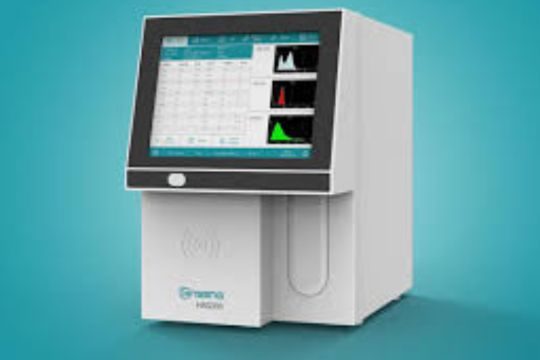
When it comes to running a successful diagnostic center in Dhaka, Bangladesh, investing in high-quality diagnostic equipment is not just a good idea — it’s a must. Hematology analyzers, biochemistry analyzers, and other diagnostic machines are the heart of your lab. They help doctors make fast and correct decisions that can save lives.
Today, we’ll share expert tips to help you choose the best hematology analyzer brand. We’ll also explain why focusing on accuracy, durability, and efficiency can save you money, avoid mistakes, and improve your lab’s workflow.
1. Accuracy: The Key to Correct Diagnosis
Accuracy is the most important thing in a hematology analyzer. Even a small mistake in blood counts can lead to wrong treatments.
- Fact: A study published in the International Journal of Laboratory Hematology found that lab errors cause up to 70% of wrong medical decisions.
- Real-world impact: Imagine giving a patient the wrong medicine because of a false blood test result. This could lead to serious health problems, lawsuits, and damage to your lab’s reputation.
Tip:
Look for analyzers with a proven track record of >99% accuracy in test results. Ask for the device’s certification (like ISO or CE approval).
2. Durability: Machines That Last Save Money
Diagnostic equipment is a big investment. A cheap machine that breaks often will cost you more in repairs and downtime.
- Statistic: Studies show that repair costs can be as high as 20% of the machine’s purchase price every year if quality is poor.
- Real-world cost: If you buy a machine for ৳10,00,000, you could end up paying ৳2,00,000 every year just to keep it running if it’s not durable.
Tip:
Choose brands known for high-quality manufacturing. Ask about the average lifespan. Good hematology analyzers last 7–10 years with regular maintenance.
3. Efficiency: Faster Testing, Happier Patients
In a busy diagnostic center, time is money. Machines that can process more samples faster help you serve more patients and increase profits.
- Efficiency data: Some hematology analyzers can process up to 120 samples per hour, while slower models may handle only 30–40 samples per hour.
- Benefit: Serving 3–4 times more patients daily boosts your revenue without needing extra staff.
Tip:
Select an analyzer based on the number of patients in your lab. Prior to purchasing, always verify the samples per hour (SPH) rate.
4. Maintenance and Support: Hidden Costs to Watch Out For
Buying the machine is just the start. Poor after-sales service can turn your good investment into a bad one.
- Fact: Around 25% of labs report serious delays because of poor technical support, according to a 2023 market survey.
- Real-world scenario: If your analyzer stops working and you have no support, you lose customers every day.
Tip:
Always check if the brand offers local support in Dhaka. Ensure parts and technicians are available quickly when needed.
5. User-Friendly Machines: Training Matters
A machine that is hard to use will slow down your lab. Plus, it can cause user errors.
- Statistic: Labs with easy-to-use machines reported 35% fewer user errors compared to labs with complicated systems.
- Training cost: Training new staff can cost between ৳50,000–৳1,00,000 depending on the complexity.
Tip:
Look for models with a simple user interface. Choose a brand that offers free training sessions for your staff.
6. Size and Space: Plan Your Lab Layout
Space is expensive, especially in big cities like Dhaka. Bigger machines need more space and better infrastructure (like cooling systems).
- Data point: A hematology analyzer needs about 5–10 square feet of space. Larger integrated systems can require up to 30 square feet.
Tip:
Measure your available lab space first. Then pick an analyzer that fits comfortably, leaving room for technicians to work safely.
7. Power Consumption: Save on Electricity Bills
Electricity is a major monthly cost for labs. Machines that use less power save you money every month.
- Cost estimate: A hematology analyzer using 200 watts can cost about ৳1,500–৳2,000 per month in electricity, depending on usage.
- Long-term savings: Over 5 years, energy-efficient machines can save you over ৳1,20,000!
Tip:
Ask the supplier for the machine’s energy consumption rating before you buy.
8. Warranty and Service Contracts: Protect Your Investment
Good brands offer warranties and service contracts that protect you from unexpected costs.
- Industry standard: A minimum 1-year warranty is normal. Some brands offer up to 3 years.
Tip:
Always get a written warranty. Ask for a preventive maintenance plan included in the contract.
9. Reviews and Testimonials: Learn from Others
Don’t just listen to the sales pitch. See what other lab owners say.
- Data point: Products with over 80% positive reviews are 2.5 times more likely to satisfy new customers.
Tip:
Check online reviews. Talk to other lab managers in Dhaka who use the brand you’re considering.
10. Price vs. Value: Don’t Only Look at the Price Tag
The cheapest machine is rarely the best value. A higher-priced analyzer often saves more money in the long run through fewer errors, less downtime, and lower running costs.
- Example: Spending ৳15,00,000 on a high-quality hematology analyzer can save you ৳3,00,000–৳5,00,000 over 5 years compared to a cheap alternative.
Tip:
Focus on total cost of ownership — not just the buying price.
Conclusion: Choose Smart, Grow Fast
At E & R Solution, we believe that the right diagnostic equipment is the backbone of a successful medical practice.
When you invest wisely in top-quality hematology analyzers and biochemistry machines, you ensure better patient care, lower running costs, and a stronger reputation.
If you are in Dhaka and need help choosing the right equipment, contact E & R Solution today. We offer expert advice, premium brands, and full after-sales support to keep your lab running smoothly.